Legal service for foreign clients
Cargo, Shipping and Transport Claims — Recovering Value Before the Clock Runs Out in Thailand
Cargo claims are rarely lost on the facts; they are lost because nobody objected in writing on the day of delivery.
Quick answer
When goods are lost, damaged, or delayed, the right to claim sits with the holder of the bill of lading or the party insured under the policy — and the carrier must be notified in writing the moment damage is found. Thai carriage-of-goods-by-sea claims prescribe far sooner than ordinary contract claims. We read the bill of lading, the limitation clauses, and the policy, then pursue the carrier, the freight forwarder, and the insurer in parallel. From THB 35,000.
From THB 35,000 — From THB 35,000 for the notice and recovery-negotiation stage; surveyor fees and court fees are billed separately. · Negotiation 1–3 months; litigation 8–18 months
Who this is for
- Importers and exporters whose goods arrived damaged
- Freight forwarders facing a claim from their own customer
- Cargo owners hit with demurrage and detention on stuck containers
- Insureds whose marine cargo claim was declined
- Trucking operators and warehouses accused of losing goods
What you receive
- An analysis of who is the carrier in law and who is merely an agent
- Notices of loss and reservation of rights served within the bill-of-lading deadlines
- Coordination of an independent surveyor and a report that stands up in dispute
- Negotiation to reduce or cancel demurrage, detention, and storage charges
- Suit in Thailand's specialised international-trade court, or arbitration where the contract requires it
Documents to prepare
- The full bill of lading, front and reverse terms
- Commercial invoice, packing list, and proof of value
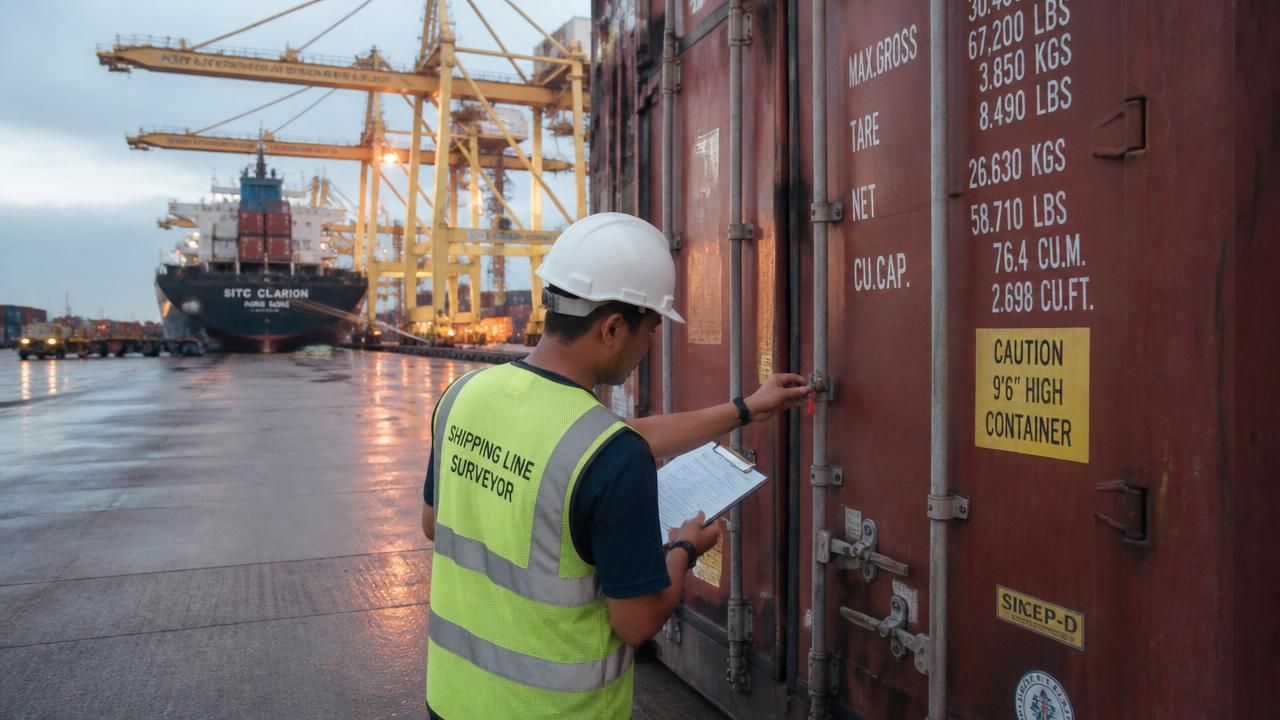
- Photographs of the container, the seal, and the goods at the moment of opening
- The delivery receipt bearing any remark, and every exchange with the carrier
- The cargo policy and the insurer's declinature letter
How it works
5-step process
- 1
Object before leaving the terminal
A single remark on the delivery receipt that the goods were not in sound condition outweighs a ten-page report written a fortnight later.
- 2
Identify the right defendant
The name on the bill of lading and the party that actually carried the goods are often different; suing the wrong one burns both time and the limitation period.
- 3
Prove when the damage occurred
The most common defence is that the goods were badly packed at origin, which makes stuffing photographs as valuable as unstuffing photographs.
- 4
Handle detention charges alongside the main claim
Detention accrues daily regardless of the dispute; carving it out for early negotiation stops the figure from ballooning.
- 5
Claim against insurer and carrier at once
Waiting for one route to conclude usually means missing the deadline on the other, so both should run together.
In depth
Cargo, Shipping and Transport Claims — Recovering Value Before the Clock Runs Out: what foreign clients need to know
Cargo disputes differ from ordinary breach-of-contract cases in one respect: nobody really argues about whether the goods were damaged. The questions that decide the case are entirely different ones — at which leg of the journey the damage occurred, who was the carrier in law during that leg, in what capacity the claimant sues, and whether an objection was made in time. Many importers lose the case on day one by rushing the goods out of the terminal to keep a production line running, then photographing the damage at the factory two days later, which hands the carrier the argument that the damage arose after delivery.
The bill of lading says more than most people read
The face of a bill names shipper, consignee, destination, and cargo particulars, but the terms that decide who is liable and for how much sit almost entirely on the reverse — the part nobody asks a copy of when the documents arrive. Once something goes wrong, the missing reverse makes it impossible to assess the limitation figure or to see which country's forum the clause points to.
A short phrase such as shipper's load and count carries far more legal weight than its appearance suggests: it disclaims any confirmation of the quantity or condition inside the container. Where goods are short-landed, the burden of showing the container was properly stuffed falls back on the shipper, and the only evidence that usually works is stuffing photographs together with the seal number.
Another overlooked point is whose name is on the letterhead. Many forwarders issue documents in their own name without operating any vessel, which does not excuse them; on the contrary, issuing in one's own name and taking the full freight is a strong indicator of contractual carrier status, opening the door to a direct claim even though a line was subcontracted.
The timing that decides the outcome
Two separate clocks run in transport cases. The first is the notice period to the carrier, which is very short and often measured in days. The second is the limitation period for suit, longer but still markedly shorter than an ordinary contract claim. Missing the first does not extinguish the claim outright; it creates a presumption that the goods were delivered in sound condition, which the claimant must then displace with considerably heavier evidence.
Concealed damage is treated differently. The law accepts that some damage appears only on unpacking and allows extra time from discovery, but on condition that the claimant can prove when and how it was discovered. A dated, signed goods-inspection record is therefore something every warehouse should keep as a matter of routine, not only after an incident.
In practice only two things genuinely stop the clock: a written extension agreed by the carrier, or the filing of suit. An assurance in a meeting that the matter is under review and the survey result should be awaited does nothing to suspend limitation, and it is why a great many claims end without the merits ever being heard.
Detention and storage charges that grow quietly
When a container is held over a dispute or missing paperwork, three costs run at once: detention to the line, terminal storage, and reefer power if it is temperature-controlled. Within weeks the combined figure regularly exceeds the value of the goods inside, which is why some importers abandon the container altogether — a decision that does not make the debt disappear.
The workable answer is to sever the detention issue from the main dispute and settle it first: return the box and pay the undisputed element while reserving rights on the damage in writing. That stops the daily accrual without prejudicing the substantive claim, provided the reservation states plainly that payment is not an admission that the goods were sound.
For exporters the risk inverts. Where the overseas buyer fails to collect, the box sits abroad and the charges flow back to the shipper as the line's contractual counterparty. Agreeing in the sale contract who bears the cost of a buyer's refusal to take delivery is one of the most valuable clauses to negotiate in advance.
Cargo insurance and the parallel claim
A cargo policy offers a faster route than suing the carrier because fault need not be proved — only that the loss came from a covered peril while cover was running. The common trap is that cover attaches and terminates according to the policy wording rather than any intuition that the goods are still in transit, so damage in a destination holding warehouse may already fall outside it.
Once the insurer pays, the claim against the carrier passes to it by subrogation. An insured who signs a release in favour of the carrier before payment may find the claim declined for having destroyed the recovery right — which is precisely why no settlement document should be signed with a carrier before both the lawyer and the underwriter have seen it.
Where the insurer declines, the reason most often relied on is packing unsuitable for the voyage, a standard exclusion. Rebutting it depends on showing the packing matched what was used on earlier shipments that arrived intact, which makes a shipment history far more useful than most people expect.
Cost structure: government fees vs professional fees
| Item | Official fee | Professional fee | Note |
|---|---|---|---|
| Notice and recovery negotiation | No government fee | THB 35,000–70,000 | Includes bill-of-lading analysis and correspondence with the carrier |
| Independent surveyor's report | None | THB 15,000–60,000 depending on cargo type | Paid directly to the surveyor |
| Proceedings in the IP and International Trade Court | Court fee scaled to claim value | From THB 120,000 per court level | Foreign parties add translation and service costs |
Imported machinery damaged by seawater
Situation: An importer found corrosion after unstuffing at its plant, having already taken delivery without any remark.
What we did: Written notice went out the same day with photographs showing salt residue and an intact seal, and a surveyor attended before anything was moved.
Outcome: The line accepted partial responsibility and settled at the negotiation stage without proceedings.
Container stranded over a documentation dispute
Situation: An exporter faced accumulating detention after the overseas buyer failed to collect for over two months.
What we did: The detention element was carved out from the buyer dispute; the cargo was returned and the undisputed sum paid under a written reservation of rights.
Outcome: The accrual stopped while the claim against the buyer remained fully preserved.
When to act, and when waiting is fine
Damage is spotted while still inside the terminal
Write the remark on the delivery document before the goods leave
The loss is below the bill's limitation figure
Direct negotiation usually beats litigation on cost
Both a policy and a liable carrier exist
Run both routes and sign no release with either side first
The contract points to foreign arbitration
Weigh the cost against the claim value before commencing
FAQ
Frequently asked questions
I took delivery without writing any remark — is the claim dead?
Not necessarily, but the burden becomes much heavier: you need photographs, witnesses who were present, and written notice as soon as concealed damage is discovered.
Are the limitation clauses on the reverse of the bill enforceable?
Usually yes under the carriage-of-goods legislation, but a carrier cannot rely on them where the loss was intentional or recklessly caused, or where the shipper declared the value.
The forwarder says it was only a broker — is that right?
It depends on whether it issued transport documents in its own name; a forwarder that issued its own bill and took the full freight is a carrier in law, not an agent.
How long is the limitation period for sea-cargo claims?
Considerably shorter than an ordinary contract claim and it starts from delivery or the date delivery should have occurred, so the start date should be checked in the first week.
The insurer paid — can the carrier still be sued?
Yes, but the paid portion transfers to the insurer by subrogation; the insured retains only the uncompensated balance.
A container is stuck over customs paperwork — who pays the detention?
It turns on whose duty the missing document was under the agreed delivery terms, so the incoterm is the first document to read before answering on cost.
Do domestic road shipments follow the same rules as sea carriage?
Not entirely: domestic carriage is governed by the Civil and Commercial Code, with different limitation and liability rules from carriage by sea, so the two must be separated from the outset.
The carrier offers compensation by weight, far below value — must that be accepted?
Not immediately. Check whether the value was declared in the transport document and whether the loss involved gross negligence, since either can displace the weight-based ceiling.
Goods are missing from a container whose seal was intact — how is that explained?
That points to a shortage at origin rather than loss in transit; the key evidence is stuffing photographs, weighbridge figures at both ends, and the seal number recorded at every handover.
Which court hears a claim against a foreign shipping line?
Thai international-trade claims fall to the Central Intellectual Property and International Trade Court unless the bill stipulates another forum or arbitration — a stipulation that can sometimes be challenged.
Related services
Customs, Import–Export & Tariff Disputes
One wrong tariff digit changes a year of landed cost — and the penalty can exceed the duty.
Denied Insurance Claims — Recovering the Indemnity You Are Owed
A denial letter is not a verdict. The clause an insurer leans on usually reads more than one way.
Civil Litigation — Contract Breach & Damage Claims
Trial team across all Thai civil courts — from complaint to enforcement.
Written by: Thai Law & Accounting Services — attorneys and licensed accountants
Reviewed by: Reviewed by a Notarial Services Attorney registered with the Lawyers Council of Thailand.
Last updated: 2026-08
Information as of August 2026. Government fees and processing times change — verify with the relevant agency before acting, or let our team verify for you.