
Property and real estate

Buying Thai property: title, buyer eligibility and transfer checks

Before paying a deposit, assess the seller authority, registered title, buyer eligibility and contract conditions. A Land Office search, condominium juristic-person records and review of possession or construction risks answer different questions. A title search alone cannot reveal every private claim or guarantee that a purchase will complete.

Property and real estate handled by our Thai lawyers and accountants in Bangkok

Short answer

A foreign condominium buyer must satisfy the statutory eligibility category as well as the building foreign-ownership quota of no more than 49 per cent of unit floor area. Land ownership by foreigners is generally restricted, with narrow permissions rather than a general investment entitlement. Lease, usufruct and superficies are distinct rights, not ownership substitutes. Calculate taxes and fees item by item for the actual transfer.

Due diligence is a search of the record, not a reading of the brochure

Our first step on any purchase is to obtain a certified copy of the title from the Land Office in the district where the property sits and to read its history. That single document shows the type of title, the exact registered area, the registered owner, every mortgage and every encumbrance, and the chain of previous transfers. A Chanote title is fully surveyed and transferable; weaker instruments such as Nor Sor 3 Gor or possessory documents carry survey and transfer risk that no contract clause can cure.

For a condominium the search widens to the juristic person: the registered foreign ownership percentage, whether this unit can be transferred to a foreign name at all, the debt-free certificate confirming no outstanding common area fees, the sinking fund position and the minutes of recent owner meetings. Buyers who skip the last two inherit both a special assessment and a dispute.

For land and houses we also check access and use. A plot with no registered right of way is landlocked in law however good the dirt road looks, and building setbacks, environmental zoning near beaches and hillsides, and construction permits attached to the plot all decide whether what you intend to build is lawful. Where a building already stands, we confirm the construction permit and the house registration match the structure on the ground.
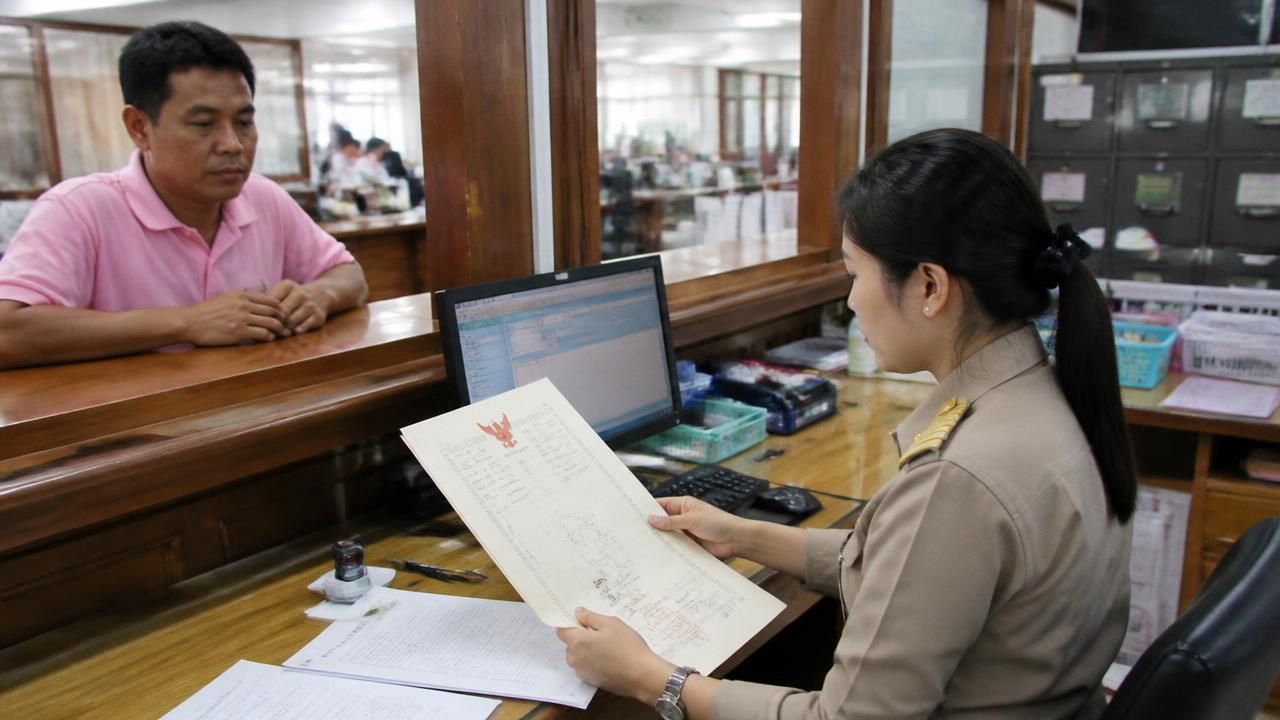
Documents and filings prepared for property and real estate in Thailand
Every file is assembled and checked before anything reaches a Thai authority.

How a foreigner can hold Thai property lawfully

For condominium ownership, determine which eligibility route under the Condominium Act applies to the buyer. Foreign-currency remittance evidence is relevant to the route relying on imported funds, but other statutory categories have different evidence. Agree the remittance record with the bank and Land Office before moving money; do not state one bank form or route as universal.

Ordinary immovable-property leases generally cannot exceed thirty years, while particular statutory regimes may differ. Usufruct concerns use and enjoyment; superficies concerns ownership of structures on another person land. Company landholding needs its own Land Code and ownership analysis, not merely a registration certificate. What does not work, however commonly it is sold, is a shell company with unfunded Thai shareholders formed only to hold a villa. That structure is challengeable and it makes the property difficult to resell or mortgage.

Buying off-plan from a developer is a different exercise again. Here the value is in the contract: the payment schedule tied to construction milestones rather than dates, the specification annexed and enforceable, penalties for late completion that are actually collectible, the developer's land title checked for mortgages granted to fund construction, and a clear position on what happens to your money if the project stalls.

Transfer day, taxes and what we do on your behalf

Thai property changes hands at the Land Office, in person or through a registered power of attorney, with the money exchanged at the counter against the registration. Transfer costs comprise the transfer fee, then either specific business tax or stamp duty, decided by the length of the seller's holding period, and withholding tax computed differently for individual and corporate sellers. The tax base and exemptions vary by charge and seller. Do not apply a single total percentage to assessed value. Distinguish statutory liability from any contractual agreement to reimburse the other party, and document that allocation before transfer.

We attend the transfer, check the deed against the certified copy obtained during due diligence, confirm the removal of any mortgage entry, verify the identity and authority of whoever signs for the seller, and coordinate the agreed payment sequence against the registration evidence. Any proposed custody or escrow arrangement needs separate terms and a legally appropriate provider. Where a client cannot travel we act under a power of attorney prepared and legalised in advance.

Because the same office handles the accounting side, we also set up what comes after: rental income declared correctly if the property is let, withholding obligations if a Thai company owns it, annual land and building tax, and the record of acquisition cost that will decide the tax position when you eventually sell.

How the work runs, step by step

  1. Step 1

    Pre-deposit review

    Before any money moves we read the reservation form, check who legally owns the property and confirm whether it can be transferred to a foreign buyer at all.

  2. Step 2

    Title and quota search

    Certified title copy from the Land Office, encumbrance and mortgage check, access rights, zoning, condominium foreign quota and debt-free position.

  3. Step 3

    Contract negotiation

    Bilingual sale and purchase agreement or lease, with milestone payments, remedies, cost allocation and the conditions that must be satisfied before completion.

  4. Step 4

    Funds and remittance

    Confirm the buyer eligibility evidence, bank records and agreed payment conditions. A quotation for legal work is not itself an escrow agreement or permission to hold client funds.

  5. Step 5

    Transfer and aftercare

    Attendance at the Land Office, tax computation and payment, collection of the registered deed, then rental, tax and annual filing set-up if you need it.

What you send us

  • Passport, and the marriage certificate if a spouse will be a party or must consent.
  • Copy of the title deed and any reservation or booking form already signed.
  • Seller identification, company documents and authority to sell where a company or attorney signs.
  • Condominium juristic person contact details for the debt-free and quota certificates.
  • Bank remittance details showing funds arriving from abroad in foreign currency.
  • For off-plan purchases: brochure, specification, floor plan, and the developer's construction permit.

Where things usually go wrong

A deposit paid before the title is read

Reservation forms are often drafted so the deposit is forfeited even when the property turns out to be untransferable to a foreign buyer.

Condominium foreign quota already full

The unit can be sold to you on paper but cannot be registered in your name, leaving a lease or a resale as the only exit.

Money remitted in the wrong name or in baht

Where the buyer relies on the foreign-remittance eligibility route, deficient bank evidence can prevent registration. Review the evidence required for the buyer actual statutory category.

A shell company formed to hold a villa

Unfunded Thai shareholders make the holding vulnerable and the asset hard to mortgage or resell. Alternative rights also require legal review; none is a guaranteed substitute for ownership or a means of evading foreign land restrictions.

Government fees and professional fees, separated

Government charges are separate from our services. Contact our team for a written quotation based on your documents and scope of work.

ItemOfficial feeOur feeNote
Title and encumbrance due diligenceLand Office copy or search charges according to the applicable scheduleContact our team for a quotationHigher for land with access, zoning or subdivision questions.
Contract drafting or reviewNo government chargeContact our team for a quotationBilingual, with the Thai text controlling at the Land Office.
Transfer at the Land OfficeTransfer fee 2 per cent, plus specific business tax or stamp duty and withholding taxContact our team for a quotationConfirm assessed and transaction values, seller status, exemptions and any current fee concession before calculating each charge.
Registered lease, usufruct or superficiesLease charges depend on the rent and schedule; usufruct and superficies registration have their own treatmentContact our team for a quotationRegistration is what makes the right binding on a future owner.

Questions foreign clients actually ask us

Can a foreigner own land in Thailand?
Not in their own name, apart from narrow exceptions such as certain investment-linked permissions. In practice foreign buyers use a registered long lease, a usufruct or superficies right, ownership of the building separate from the land, or a genuinely operating Thai company. Condominium units, by contrast, can be owned outright within the building's foreign quota.
How long does a purchase take from agreement to transfer?
The schedule depends on title evidence, buyer eligibility, bank documents, mortgage discharge, parties availability and any developer conditions. Agree milestones after reviewing those dependencies; neither a resale nor an off-plan handover has a guaranteed completion period.
Is a thirty-year lease with a renewal option safe?
The registered thirty-year term is enforceable. A renewal promise is a contractual undertaking, not a registered right, so its value depends on who gives it and what security sits behind it. We draft renewal mechanisms with that limitation stated openly rather than implied away.
Who pays the transfer taxes?
The law identifies the person liable for a particular tax or charge. A sale agreement may allocate or reimburse the economic burden between the parties, but that does not erase statutory liability. Review seller type, applicable taxes and any mandatory contract rules rather than assuming all charges can be shifted freely.

Send us the title deed number, the unit or plot details and any form you have already signed. We will tell you what the record actually says, whether the property can be registered in your name, what the real completion cost is, and what to fix in the contract before you pay another baht.

Contact our office
contact@tla.co.thจ.–ส. 9–18น.15 นาที