Legal service for foreign clients
Thailand Retirement Visa (Non-O) for Applicants Aged 50+ in Thailand
Stay in Thailand year by year on provable savings or income — no job, no employer needed.
Quick answer
Applicants aged 50 or over can hold a Non-O retirement visa and extend it one year at a time, generally by showing at least 800,000 baht seasoned in a Thai bank, or a regular income of at least 65,000 baht a month, or a combination reaching 800,000 baht a year. Working in Thailand is not permitted, and 90-day reporting applies. Criteria change; verify with the Immigration Bureau before filing. Contact our team for a quotation.
Contact our team for a quotation — Contact our team for a quotation; government fees are billed separately. · Timeframe stated in the quotation
Who this is for
- Retirees aged 50+ planning a long-term base in Thailand
- Pensioners with a regular income from abroad
- Tourists or exemption stamp holders converting to retirement status
- First-year holders planning next year's seasoning of funds
What you receive
- Eligibility screen: age, nationality, and the financial route chosen
- Thai bank account setup and a seasoning timeline that meets the rules
- Extension document set: bank letter, passbook, residence map
- Embassy-certified income evidence where the income route is used
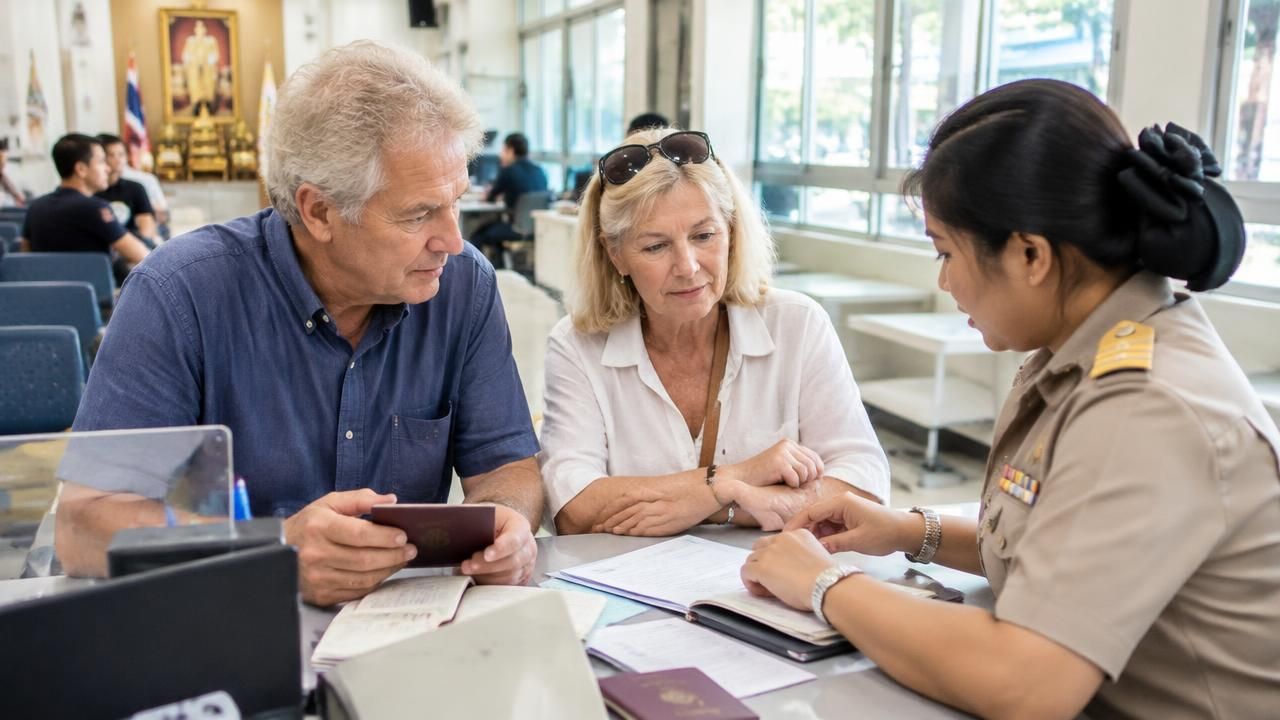
- Appointment handling with the immigration office where you file
Documents to prepare
- Passport with six or more months of validity left
- Thai bank balance confirmation letter and original passbook
- Regular income evidence, such as a pension statement or embassy income letter
- Thai residence evidence: lease, house registration, or TM30 notification
- Photos and the current immigration application forms
How it works
4-step process
- 1
Choose the financial route
800,000 baht on deposit, 65,000 baht monthly income, or a combination — each has different seasoning periods and paperwork, which we compare before you commit.
- 2
Prepare funds and account
Deposits must sit in a Thai account for the required period before filing and keep a minimum balance afterwards; we map the calendar day by day.
- 3
Apply or convert
Apply at a Thai embassy abroad, or convert inside Thailand where permitted, then extend one year at a time at immigration.
- 4
Post-approval care
90-day reporting, a re-entry permit before travel, and next year's documents prepared in advance.
FAQ
Frequently asked questions
Can I work on a retirement visa?
No. The retirement visa prohibits work in Thailand outright, including paid voluntary roles. Working without a permit exposes both you and the engager to penalties.
Can I withdraw the 800,000 baht after approval?
Generally a minimum balance must be kept for a set period after approval, and the yearly total must not fall below the threshold. Withdrawing early can void next year's extension — confirm the current rules with immigration.
Can foreign income replace the deposit?
Yes, with a regular income of at least 65,000 baht a month supported by a letter from your embassy in Thailand. Some embassies no longer issue these letters, so check before choosing this route.
How does it differ from the LTR visa?
The retiree LTR requires a much higher pension income and grants ten years; the Non-O retirement uses lower deposit or income thresholds but renews annually. We compare both against your actual situation.
Related services
Immigration Lawyer — Retirement, Marriage, LTR, Overstay
All visa types, citizenship, and PR applications.
90-Day Reporting (TM47) and TM30 Address Notification
Two different duties with different responsible parties — missing either brings fines and extension trouble.
Long-Term Resident (LTR) Visa — 10 Years
Four qualifying groups, annual reporting, and tax perks for some — with strict screening at the BOI.
Thailand Privilege Membership (formerly Thailand Elite)
A 5- to 20-year membership visa with no income test — but no right to work.
Written by: Thai Law & Accounting Services — attorneys and licensed accountants
Reviewed by: Reviewed by a Notarial Services Attorney registered with the Lawyers Council of Thailand.
Last updated: 2026-08
Information as of August 2026. Government fees and processing times change — verify with the relevant agency before acting, or let our team verify for you.