Legal service for foreign clients
Construction & Property Development Disputes in Thailand
Construction cases turn on what the site records say, not on elegant contract wording.
Quick answer
The disputes we see most often are defective work, delay and liquidated damages, variations ordered only by word of mouth, retention money never released, and a contractor walking off site mid-project. We begin by locking down site evidence before conditions change — progress photographs, supervisor reports, correspondence, and an expert inspection — then judge whether to negotiate, settle on terms, go to arbitration under the contract, or file in court. From THB 55,000 per matter.
From THB 55,000 — From THB 55,000 · expert inspection and court filing fees are billed separately at cost · Case assessment and strategy in 2–3 weeks · litigation follows the court calendar
Who this is for
- Owners whose delivered work departs from the drawings or fails after handover
- Contractors penalised for delay without credit for owner-caused events
- Condominium buyers and juristic persons facing common-area damage
- Subcontractors and suppliers stuck in a broken payment chain
- Developers closing final accounts with several contractors at once
What you receive
- A site-evidence file ordered by date and by payment milestone
- A delay analysis apportioning each period to the party responsible
- Damage and rectification costings referenced to verifiable market rates
- Demand letters and settlement proposals with a figure behind every line
- Court or arbitration proceedings under whichever clause governs
- Contract-drafting fixes for the next project so the same gap does not reopen
Documents to prepare
- The construction contract, annexes, drawings, and specifications
- Quotations, the bill of quantities, and milestone payment records
- Progress photographs, daily reports, and site-meeting minutes
- Variation notices, change orders, and evidence of approval
- Correspondence on delay and extension-of-time requests
- Any engineer or expert inspection reports already obtained
How it works
6-step process
- 1
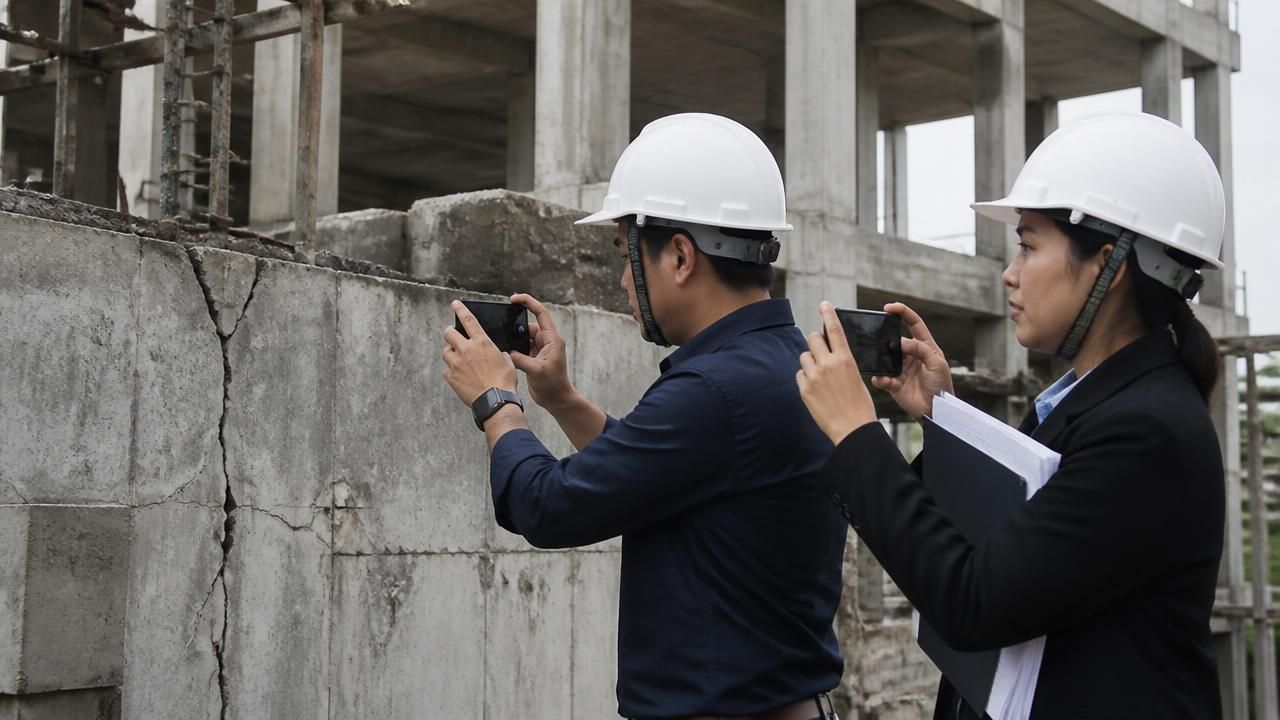
Preserve the site condition first
Photograph and log each defect systematically before anything is demolished or covered.
- 2
Read the contract for the clauses that actually bite
Check penalty, extension, dispute-resolution clauses, and any notice deadlines.
- 3
Build the delay timeline
Compare programme against actual progress milestone by milestone to attribute each slip.
- 4
Fix the quantum
Separate rectification cost, lost opportunity, and prolongation cost.
- 5
Negotiate with a live alternative
An offer backed by a drafted complaint moves faster than one backed by nothing.
- 6
Proceed to court or arbitration
Prepare expert witnesses and working papers where every figure can be traced back.
In depth
Construction & Property Development Disputes: what foreign clients need to know
Construction disputes rarely start with a visible crack; they start with ambiguity baked into the contract on day one — drawings revised on site without paperwork to match, a completion date that never accounted for the seasonal weather everyone knew was coming, or retention-money clauses drafted broadly enough to support several readings. By the time a project stalls on a delayed instalment, a contractor walks off site, or an owner refuses the final payment, every party goes back to the original contract and discovers that whatever was agreed verbally on site was never written down anywhere.
Defective work and latent defects surfacing after handover
Defects spotted while a project is still underway differ from latent defects that only surface after handover. The first kind is usually resolved on the spot while crews remain mobilised; the second is far harder, because when leaks through structural work or cracks in a load-bearing wall appear months or years after handover, the first question is what actually caused it — design, materials, or workmanship — since each cause points to a different party under both the contract and the underlying law.
Standard construction contracts usually set a defined defects-liability period, but that period rarely covers structural defects that the underlying law protects for a longer stretch than the contractual warranty. An owner needs to separate a defect that falls within the contractual warranty period from a structural defect that carries its own statutory limitation period, because the remedies available and the time within which a claim must be brought differ. Left unaddressed for too long, a claim can lapse without anyone noticing.
Proving in practice that a defect traces to faulty construction depends on technical evidence rather than recollection — photographs taken during the works, daily site-supervision reports, and material test results retained from the start. Where none of this was filed systematically from day one, the party carrying the burden of proof starts a dispute at a real disadvantage, since establishing the cause of a defect typically falls to the party making the claim.
Delay, extension-of-time claims, and daily liquidated damages
Most construction contracts fix daily liquidated damages in advance for late delivery, but a contractor's right to claim an extension of time when a delay results from something outside its control — an owner-directed design change, late handover of the site, or a force-majeure event as the contract defines it — is routinely underused in practice, because many contractors never submit a written extension request within the contractual deadline. By the time liquidated damages are disputed, there is no paper trail showing the delay was not the contractor's fault.
Calculating daily liquidated damages has to sit alongside the principle that such a rate must function as a reasonable pre-estimate of loss rather than a penalty designed to intimidate the other party. Where the daily rate is plainly disproportionate to the contract value with no supporting rationale, a court or an arbitral tribunal has discretion to scale it back to reflect actual loss. Both sides should therefore prepare evidence of actual damage for comparison rather than treating the contract figure as automatically final.
On projects with several tiers of subcontracting, a delay by one subcontractor can throw off the whole schedule, yet liability to the owner still sits with the main contractor under the head contract unless the parties specifically agreed otherwise. A main contractor therefore needs a close tracking system for each subcontractor's progress and a documented record of delay notices, so that liability can later be passed down to the actual subcontractor responsible once the owner claims liquidated damages upstream.
Variation orders agreed only verbally on site
Almost no real construction project follows its original drawings to the letter. Site engineers or an owner's project manager routinely instruct changes or extra work verbally to keep progress moving, meaning to sort out the paperwork and price later. By final-account time, the owner often denies ever giving the instruction, or concedes it happened but disputes the contractor's price, because no written variation order was ever issued as the contract itself required.
Standard construction contracts typically require variation or change instructions to be in writing and signed by an authorised person before they bind the owner. In practice, conduct can create an exception — where the owner accepts and continues benefiting from work done under a verbal instruction without objection, that conduct may help prove an agreement existed even absent complete paperwork. But it demands far more circumstantial evidence to establish than a properly signed variation order would have needed in the first place.
The practical habit that actually reduces disputes is confirming every verbal instruction in writing straight away, even a short email or message through whatever project communication channel is in use, naming the scope, the date, and who gave it, then asking the other side to countersign within a short window. Even where the other party ignores it, a clear record of when it was sent still carries far more weight in a hearing than having nothing on file at all.
Retention money and final-account disputes
Retention money withheld from each payment instalment exists to guarantee that a contractor will fix defects found during the warranty period before receiving the balance in full. In practice, many owners hold retention past the due date, citing minor unresolved defects or the absence of a formal handover certificate, even where the building has already been in use for some time. Delayed release of retention is one of the leading triggers for a dispute that ends up in litigation or arbitration.
The final account is usually where every accumulated grievance surfaces at once, because it consolidates variations, omissions, liquidated damages, retention, and every other set-off into one figure. Where neither side confirmed running totals along the way, the numbers each party arrives at when they first sit down to close the account can diverge sharply, and reaching agreement at that stage is far harder than settling the running balance instalment by instalment.
One approach that keeps the final-account dispute manageable is producing an interim reconciliation each quarter or at each major milestone, with both sides signing off on the running figure even though it is not yet final. When a dispute does arise, those jointly signed interim reconciliations narrow the contested issues down to whatever arose in the last stretch alone, rather than reopening the whole project's history.
Contractor abandonment mid-project
Abandonment mid-project causes harder-to-value damage than ordinary delay, because the owner must scramble to bring in a new contractor to finish work whose true condition nobody can verify. Before taking any step, the owner should first check whether the reason work stopped actually meets the termination threshold set by the contract and the underlying law, because terminating the wrong way can leave the owner the one in breach, even where the contractor walked off first.
Once the right to terminate is established, the step most often skipped is a joint site survey with an independent witness, photographing and filming the entire state of the works before a replacement contractor moves in. Without a record of conditions at the moment the site is taken back, it later becomes very difficult to prove which damage traces to the original contractor and which arose only after the replacement crew began work.
Damages claimable for abandonment typically include the price premium paid to bring in a replacement contractor above the original contract rate, the knock-on costs from the resulting overall delay, and in some cases damage to already-completed work left unmaintained while the site sat empty. Every item needs supporting documentation with a traceable figure rather than a rough estimate, since courts and tribunals tend not to credit damages that cannot be verified back to a source.
Payment chains among subcontractors and material suppliers
Large construction projects run on a payment chain with several links — owner to main contractor, main contractor to subcontractor, subcontractor to material supplier. When one link stalls, say an owner withholds an instalment from the main contractor over a quality dispute, the effect flows down to subcontractors and suppliers who have no direct contractual relationship with the owner at all, leaving parties uninvolved in the underlying dispute to absorb its risk regardless.
Subcontractors and suppliers should therefore scrutinise their own payment terms closely, particularly any pay-when-paid clause tying the main contractor's payment obligation to it first receiving payment from the owner, a term that quietly transfers the whole chain's cash-flow risk downstream. Where such a clause exists, it is worth negotiating either its removal or a firm maximum payment deadline regardless, so a party's right to be paid does not hang indefinitely on a dispute one or two tiers removed.
Where payment genuinely does not come through, subcontractors and suppliers can pursue their own contractual claim directly against their own counterparty, and depending on the facts and the nature of the work performed, may in some cases hold statutory rights over the goods or work already supplied. Assessing these options is worth doing early, well before an accumulating unpaid balance starts squeezing the claimant's own cash flow.
Defect claims by condominium buyers and the juristic person
Defect disputes in condominium projects have a shape of their own, distinct from ordinary construction cases, because the affected parties include individual buyers finding defects inside their own units and the condominium juristic person responsible for common property such as lifts, shared electrical systems, and the roof structure. Each buyer holds a claim against the developer under their own sale-and-purchase contract, while the juristic person needs a resolution from the co-owners' meeting before suing on the common property's behalf, which usually means gathering resolutions and evidence takes longer than in an ordinary case.
One recurring point of contention is the line between individually owned property and common property, since some defects — pipework embedded in a wall shared between two units, or waterproofing on a roof slab sitting above only certain units — can be read either way. Getting the classification right matters because it determines who has standing to sue and who bears the interim repair cost while the dispute is unresolved, and that interim cost frequently falls on the buyer or the juristic person even where the developer is ultimately found liable.
Where a juristic person discovers a common-property defect after the contractual warranty has expired, it is worth checking whether the general statutory limitation for structural defects still runs, since that right is entirely separate from the sale-contract warranty and often runs longer than many parties assume. Getting the limitation assessment right early prevents a juristic person from forfeiting a claim needlessly on the mistaken belief that time had already run out.
Expert inspection and building quantum evidence
Almost every construction dispute turns on the opinion of an independent engineer or architect, since neither a court nor an arbitral tribunal has the technical grounding to determine causation on its own. Independence should be the first criterion in choosing an expert, because an opinion produced by someone with a close relationship to either side invariably gets challenged on credibility, whatever the technical substance actually says.
Site inspection should happen as soon as possible after a defect is found, because damage conditions keep changing with weather, continued use, or even a temporary patch-up one side makes before a joint inspection occurs. Where feasible, the other party should be invited to observe the inspection to head off any later argument that it was not conducted fairly, and photographs, video, and the precise location of each item of damage should be logged in detail from the very first site visit.
Quantifying loss in a construction case needs a clean split between the cost of remedial work to restore the contracted standard, consequential delay damages, and any other flow-on cost such as substitute accommodation during repairs. Each component should be backed by at least two quotations from independent remedial contractors, so the figure put before a court or tribunal carries more weight than a self-generated estimate from the party claiming the loss.
Court versus arbitration, and preserving evidence on a live site
Standard contracts used on larger projects commonly route disputes to arbitration instead of the courts, since arbitration allows the parties to choose a decision-maker with direct engineering knowledge, the process is more flexible, and the award enforces abroad under the conventions Thailand has joined. But the cost of running an arbitration is usually significantly higher than litigation, particularly the arbitral institution's administration fee and the arbitrator's fees, both calculated against the amount in dispute.
Where the contract does not clearly settle the choice, or where the question is whether to hold the parties to an arbitration clause at all, several factors deserve weighing together: the amount in dispute, the technical complexity calling for a specialist decision-maker, any need for confidentiality over project information, and the urgency of interim relief — for instance, an order preventing evidence from being destroyed or a defective section from being demolished before inspection — since some interim measures are quicker to obtain and more clearly enforceable when sought directly from a court.
Whichever route is ultimately chosen, preserving evidence on a site that is still in active use has to happen the moment a dispute looks likely, because a construction site changes condition faster than most other locations — urgent safety repairs, weather, and continuous use by occupants or building users all move quickly. Assigning someone to keep a daily photographic log, setting aside disputed material samples separately, and giving the other side written notice before any repair that might destroy evidence are all basic steps that keep a case from weakening simply with the passage of time.
Cost structure: government fees vs professional fees
| Item | Official fee | Professional fee | Note |
|---|---|---|---|
| Reviewing the construction contract and issuing a preliminary opinion on claims | No government fee at the advisory stage | THB 55,000–95,000 | Scaled to the volume of contract documents and payment instalments to review |
| Engaging an independent expert for a site inspection and technical opinion | Independent expert fees set at market rate for the relevant discipline | THB 75,000–180,000 | Excludes the expert's own fee and varies with the scale of the project inspected |
| Handling court litigation over a construction dispute | Court filing fee calculated on the claim value under the Civil Procedure Code | From THB 150,000 per court instance, depending on claim value and complexity | Excludes fees for any expert witness engaged to testify in the proceeding |
| Handling arbitration proceedings under an arbitral institution | Institutional and arbitrator fees set by the institution's schedule against the disputed amount | From THB 220,000, depending on the number of arbitrators and the claim value | Excludes hearing-related costs collected directly by the arbitral institution |
A condominium juristic person finding roof waterproofing defects after warranty expiry
Situation: Water leaked into several top-floor units nearly two years after the sale contract's warranty period had run out
What we did: We assessed the separate statutory limitation for structural defects apart from the contractual warranty, arranged a structural engineer to establish causation, and issued a demand letter supported by the technical report
Outcome: The developer agreed to carry out repairs and bear the cost in full without the matter proceeding to a court hearing
A contractor charged full daily liquidated damages despite grounds for an extension
Situation: The project slipped because the owner ordered a mid-project foundation redesign, but the contractor had never filed a written extension request as the contract required
What we did: We compiled site-meeting minutes and emails showing the owner had in fact ordered the redesign, and used that conduct to negotiate down the number of days counted for liquidated damages
Outcome: The parties agreed to scale liquidated damages down in proportion to the days attributable to the redesign instruction, without referring the dispute to arbitration
A material supplier left unpaid under a pay-when-paid clause
Situation: The main contractor stopped paying for materials, citing an instalment it had not yet received from the owner over a quality dispute unrelated to the supplier
What we did: We reviewed the pay-when-paid wording in the supply contract, found it not sufficiently clear to bind the supplier, and pursued a direct claim against the main contractor under the supply agreement
Outcome: The main contractor paid the outstanding material invoices in full, separately from whatever it was still disputing with the owner
When to act, and when waiting is fine
A leak or crack surfaces after the works have already been handed over
Photograph and give written notice immediately, then check whether the item still falls within the contractual warranty or the longer statutory limitation, before either window closes
A variation is instructed verbally during construction
Confirm it in writing right after the instruction is given, even briefly, since documentation sent closest in time carries more weight than a later recollection
A contractor stops work abruptly without explanation
Confirm the correct termination procedure before taking any step, and conduct a witnessed survey of the works left unfinished before a replacement contractor enters the site
The contract routes disputes to arbitration
Weigh the claim value and any need for interim relief before automatically following the clause, since urgent court protection can still be necessary alongside an arbitration
FAQ
Frequently asked questions
Can a verbally ordered variation still be paid?
Often yes, if other evidence shows the work was done and accepted — photographs, minutes, chat messages, or the owner inspecting it without objection.
Are defects found after handover still actionable?
Latent defects invisible at inspection remain claimable within the statutory period. The battle is proving the defect was inherent, not caused by use.
A contractor abandoned the site — what comes first?
Serve the contractual notices in full, survey and record the work actually completed on the stop date, then bring in a replacement. That order matters: it is the basis for computing your loss.
Can excessive liquidated damages be challenged?
Yes — both by attributing part of the delay to the owner and because the court may reduce a penalty that is disproportionate to the actual loss.
Can a condominium juristic person sue the developer itself?
It can, for common property, with a proper resolution and authority. Damage inside a unit is claimed by that unit's owner.
How do we choose between court and arbitration?
The clause usually decides. Where there is a choice, arbitration suits technical disputes needing a tribunal that understands building work but costs more up front; court suits clear breach cases where enforcement tools matter.
If there is no written confirmation of a verbal variation, can payment still be claimed?
It can still be pursued where circumstantial evidence supports it, such as the owner having accepted and continued using the work without objection, but proving it takes longer and carries more risk than having written confirmation from the outset
Can retention held past its due date be recovered before a case concludes?
Where the contractual date has passed and no material defect remains outstanding, a demand letter can be sent to negotiate release of some or all of the retention without waiting for the whole matter to resolve, since it is a right that stands apart from other unresolved defect issues
Can a single condominium buyer sue over a common-property issue alone?
As a rule, a common-property claim needs to proceed in the name of the juristic person following a resolution of the co-owners' meeting; an individual buyer's own standing covers defects inside their own unit under their sale-and-purchase contract
Is arbitration suitable for a small-value dispute?
For a modest claim value, institutional and arbitrator fees can consume a disproportionate share relative to the amount at stake, so litigation or a negotiated settlement is usually worth considering first
How can damage be traced to the original contractor rather than the replacement crew?
This relies on a condition record made the moment the site is retaken, such as photographs and video taken with an independent witness present; without that record, apportioning liability afterward becomes very difficult
When should evidence-gathering start if a dispute looks likely?
It should start at the very first sign of friction, such as a quality complaint or a withheld instalment, because site conditions change quickly and evidence degrades or disappears the longer collection is delayed
Related services
Civil Litigation — Contract Breach & Damage Claims
Trial team across all Thai civil courts — from complaint to enforcement.
Arbitration & Commercial Mediation
Faster, confidential resolution that travels across borders.
Draft & Review Business Contracts — NDA, JV, Shareholder
Enforceable contracts — bilingual, with dispute-resolution and arbitration clauses.
Land & Real-Estate Lawyer — Title, Lease, Usufruct
Title due diligence, sale, lease, usufruct, superficies — and closing at Land Office.
Written by: Thai Law & Accounting Services — attorneys and licensed accountants
Reviewed by: Reviewed by a Notarial Services Attorney registered with the Lawyers Council of Thailand.
Last updated: 2026-08
Information as of August 2026. Government fees and processing times change — verify with the relevant agency before acting, or let our team verify for you.